How to fly the offset ("teardrop") hold entry
By Rory Bennett (ATPL, FI: CPL, IR, ME, UPRT, FIC) · Published 15 May 2026
Direct answer
The offset entry (ICAO Sector 2, FAA "teardrop") applies when your heading at the fix falls in the 70° sector towards the holding side of the inbound course. Cross the fix, turn in the direction of the hold to track a 30° offset QDR from the fix on the holding side ("outbound track" −30° for a right-turn hold, +30° for left). Fly the QDR for one wind-corrected minute at or below FL140, then turn in the direction of the hold to intercept the inbound course back to the fix[1].
| # | Step | What you do |
|---|---|---|
| 1 | Confirm Sector 2 | Confirm your heading at the fix falls in Sector 2. |
| 2 | Calculate the offset QDR | Take the reciprocal of the inbound course ("outbound track") and subtract 30° for a right-turn hold, add 30° for a left-turn hold. This is the QDR you will track from the fix. |
| 3 | Cross the fix and turn to the QDR | On crossing the fix, turn to intercept and track the offset QDR. This is a tracked QDR FROM the fix, not a free air heading or track under ICAO. |
| 4 | Start the timer | Start the timer outbound. |
| 5 | Fly the wind-corrected minute | Fly the QDR for one wind-corrected minute (1.5 minutes above 14,000 ft), or to the published limiting distance or radial. |
| 6 | Turn to intercept inbound | At the end of the leg, turn in the SAME direction as the hold to intercept the inbound course back to the fix. |
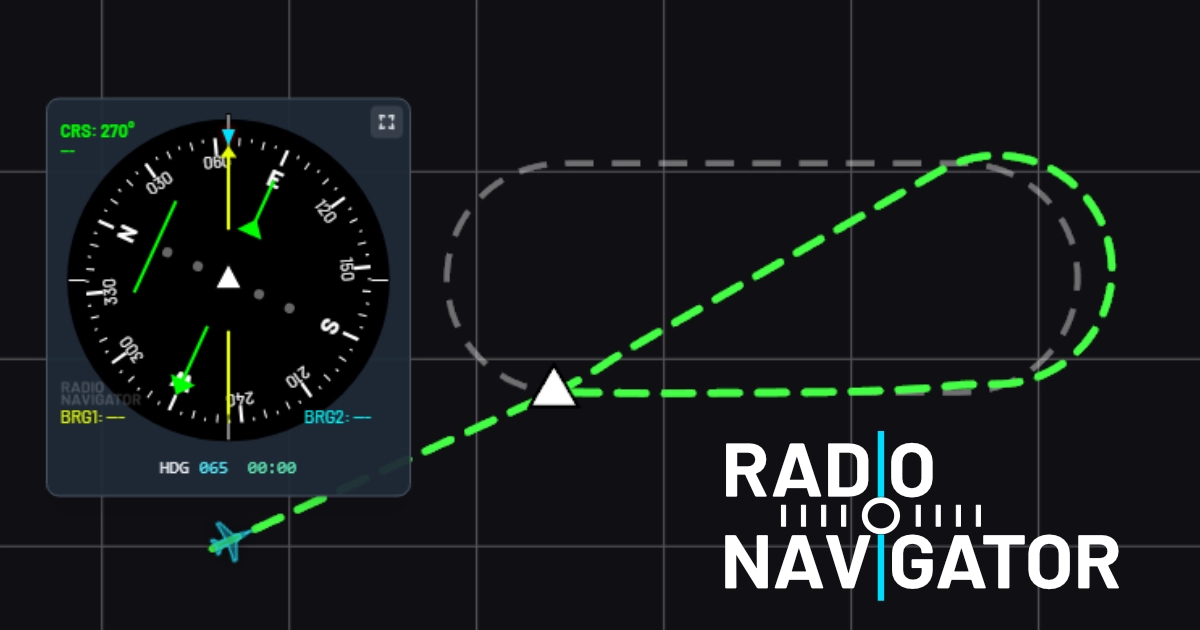
Offset entry walkthrough
A short walkthrough of the offset entry: one tracked QDR leg, one final turn into the hold. Full transcript is below the video.
Video transcript
When the offset entry applies
The offset entry is the procedure for Sector 2, the 70° sector heading towards the holding side of the inbound course[1]. It catches headings approaching the fix from the non-holding side into the holding side that are too oblique for a direct entry: the turn at the fix would lead to being far too tight outbound, making it difficult to intercept the inbound track. Instead, the Offset Sector 2 entry uses a 30 degree offset to place the aircraft in the correct position to intercept the inbound track.
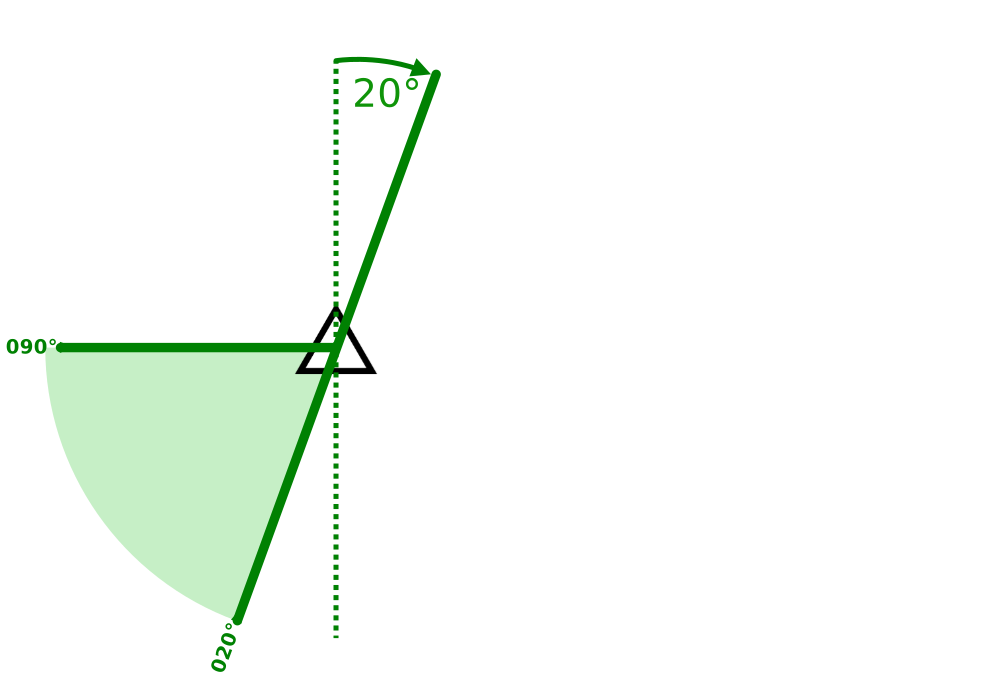
For a standard right-turn hold with inbound course 270°, Sector 2 spans headings from 090° to 020° (a 70° band.) For a left-turn hold the sector mirrors to the other side[1]. See how to determine hold entry for the sector geometry in full. If your heading at the fix falls instead in Sector 1 or 3, see the parallel entry or direct entry.
How to fly the offset entry, step by step
- Track to the fix using whichever navaid the holding fix is based on.
- Calculate the offset QDR from the outbound track (reciprocal of inbound): subtract 30° for a right-turn hold, add 30° for a left-turn hold.
- Bug the offset heading before the fix.
- On crossing the fix, turn to intercept and track the offset QDR.
- Start the timer when wings level on the offset heading and the QDR is established.
- Fly one wind-corrected minute (1.5 minutes above 14,000 ft), or to the published limiting distance or radial[1].
- Turn in the direction of the hold to intercept the inbound course back to the fix.
The 30° offset QDR
The offset QDR is the most important component of this entry, making it unique from the others. It is 30° offset from the inbound course towards the holding side. Two equivalent ways to calculate it:
- From the outbound "course" (reciprocal of inbound): subtract 30° in a right-turn hold (e.g. outbound 090°, offset 060°). Add 30° in a left-turn hold.
- From the inbound course: add 210 for a LH hold, 150 for a RH hold.
Pilots and instructors sometimes call this QDR the gate because, in a normal hold, the same 30° offset QDR is where you would find yourself at the end of the outbound leg. The term "gate" is not used in ICAO Doc 8168; it is simply a very useful colloquialism. The benefit to this entry is that it puts you in the right place to intercept the inbound track, being the only entry which involves tracking a QDR.
Why it is a QDR, not a free-air track
The offset leg is flown as a tracked QDR from the fix, not as a free-air track[1]. The difference matters in wind:
- Not tracking the QDR means the turn and drift at the fix can put you in a different position at the end of the leg depending on approach angle.
- A tracked QDR uses the navaid bearing indication to maintain the bearing FROM the fix at exactly the offset or "gate" putting you in a reliable position at the end of the leg.
With the QDR tracked, the final turn at the end of the leg rolls out cleanly onto the inbound course regardless of wind. With a free-air heading the rollout can be ten or more nautical miles off the inbound, requiring a long re-intercept and (in strong wind) placing the aircraft outside the protected area. The hold visualiser draws the offset entry from any arrival heading and wind, so you can see where the leg ends up.
The turn back to the inbound
At the end of the timed leg, turn in the same direction as the hold to intercept the inbound course back to the fix.[1] This can be monitored and corrected just like the normal inbound turn.
Worked example
Clearance: "Hold at HLDER, 270° inbound, right turns."
Setup: Inbound 270°, outbound 090°.Offset QDR = outbound − 30 = 060°.
Approach: You arrive at HLDER on a heading of 050° placing you in the offset entry sector.
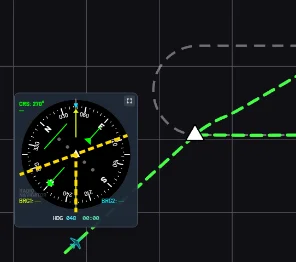
Procedure:
- Cross HLDER and turn RIGHT to intercept the 060° QDR from HLDER.
- Wings level on a heading that gives a 060° track from HLDER, start the timer.
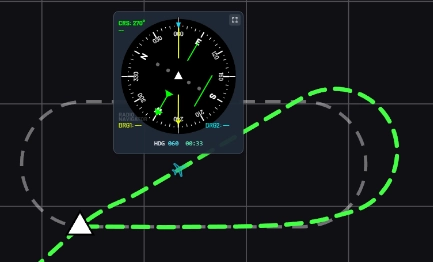
- Fly the 060° QDR for one minute (nil wind, no correction).
- At one minute, turn RIGHT to intercept inbound 270° back to HLDER.
Offset vs teardrop terminology
ICAO Doc 8168 Vol I §6 Ch 1 uses "offset entry" in its text[1]. FAA AIM 5-3-8 uses "teardrop"[2]. Both refer to the 30° offset procedure. In the FAA world, the AIM states "turn outbound to a heading for a 30 degree teardrop entry within the pattern" which is a subtle difference to ICAO "at the fix, the aircraft is turned onto a heading to make good a track making an angle of 30° from the reciprocal of the inbound track on the holding side."
Differences for FAA AIM
FAA AIM 5-3-8 prescribes a "teardrop" entry that is functionally similar to ICAO's offset entry: same 30° offset, same one timed leg, same final turn into the hold, but the AIM does not specifically state it should be tracked from the fix.[2]. Standard differences across all three entries apply:
- Bank angle ceiling: ICAO 25° or rate-one, whichever needs the lesser bank; the FAA instead offers a choice of rate-one, 30°, or 25° with a flight director[2][3].
- Timing break: FAA "at or below 14,000 ft MSL"; ICAO "at or below 14,000 ft". Numerically equivalent under standard atmosphere[2].
- Terminology: FAA "teardrop", ICAO "offset"[1][2].
Common mistakes
- Calculating the offset the wrong way. Remember, OB+30 LH, OB-30 RH.
- Flying a free air track instead of tracking the QDR. The offset leg is a tracked QDR FROM the fix, not a heading under ICAO. Establish the bearing on the HSI, CDI or RBI/RMI and fly the heading required to maintain it.
- Forgetting wind correction on the offset leg timing. The offset leg should be flown for one wind-corrected minute (1.5 minutes above 14,000 ft) with corrections made for a headwind or tailwind. Failing to make these corrections will put you in the wrong place to intercept the inbound track.
Practise this in the simulator
Use the simulator to practise this procedure. You can change the wind and monitor the instruments in your browser.
7-day free trial, no card required. Includes Just Fly, the Intercept Trainer and the Hold Visualiser. Reverts to the free tier when it ends; you are never charged automatically.
More about the tools for this topic:
- Hold Visualiser draws the offset entry, and the alternate one too when you arrive near a sector boundary.
- Holding Pattern Trainer grades the entry you choose and the hold that follows it.
Check your understanding
Read each question. Decide on your answer. Then select Show answer to check it.
Show answer
Frequently asked questions
Is "teardrop" the same as the offset entry?
Functionally: Yes. "Teardrop" is the FAA AIM term (5-3-8.) "Offset entry" is the ICAO Doc 8168 term (Vol I §6 Ch 1) that the rest of the world uses ( ;) ). The procedure and the 30° offset are identical under both standards - however the FAA AIM leaves it vague as to whether the offset is tracked as a QDR.
Why is the offset 30°?
The 30° offset is sized so that, when flown for one wind-corrected minute at standard holding speeds, a rate-one turn at the end of the leg rolls out near the inbound course on the holding side. Somewhat intriguingly, this breaks down over 180KTAS when 25° AoB is used instead of rate one, where the "gate" QDR is more like 40° offset, meaning the offset entry will leave you tight at higher speeds - we can only assume the procedure designers allow for this.
Is the offset QDR the same as "the gate"?
The numerical value of the offset entry QDR is the same as the value pilots and instructors colloquially call the gate (30° from the hold axis on the holding side). The same calculation works for both! A handy number to have for any hold.
Do I track the QDR from the fix or fly a heading?
Track the QDR. (ICAO.) The offset entry leg is a tracked bearing from the fix, with wind correction applied to the heading. Flying a fixed heading without tracking the QDR will leave you on the wrong line, especially in strong winds.
How long is the offset leg?
1 minute at or below 14,000 ft (4,250 m), 1.5 minutes above, wind-corrected (ICAO Doc 8168 Vol I §2.2.9; FAA AIM 5-3-8). If the procedure publishes a limiting DME distance or limiting radial, that replaces the timer.
When does the offset entry apply?
When your heading at the fix falls in Sector 2.
Is the offset entry the easiest to fly?
When flown correctly, it leads to a known position in the hold making for a precise and easy entry compared to the others.
Sources
- International Civil Aviation Organization, Procedures for Air Navigation Services: Aircraft Operations (PANS-OPS), Doc 8168, Volume I, Flight Procedures, Part II, Section 6, Chapter 2 (Holding Criteria), current edition. Not freely distributable; cited by document number and section.
- FAA Aeronautical Information Manual, Section 5-3-8, Holding. Current edition. faa.gov/air_traffic/publications/atpubs/aim_html/chap5_section_3.html
- Federal Aviation Administration, Instrument Flying Handbook (FAA-H-8083-15B), Chapter 10 (Departure, En Route, and Arrival Procedures), holding section. faa.gov/.../FAA-H-8083-15B.pdf
Related articles
This article is for study. Follow the instructions from your qualified flight instructor. Use current charts, procedures, and the regulations from your aviation authority.
© 2026 RHBA Radio Navigator. All rights reserved.